
For most commercial lots showing surface fatigue but a structurally sound base, a mill-and-overlay is the right call. Full-depth replacement is the answer when you see alligator cracking, widespread rutting, or base failure. New construction demands an engineered pavement section from a licensed PE before a single shovel hits the ground. Whichever path fits your property, the FHWA recommends budgeting 2–3% of total facility asset value annually for pavement maintenance. Most owners budget closer to 0.5%, and that gap is what turns a low-cost sealcoat treatment into a costly full replacement.
Your immediate next steps:
-
Measure your lot’s square footage and map any distress zones (cracking, rutting, ponding)
-
Identify expected traffic: passenger cars only, or regular delivery/truck loads?
-
Request an engineered pavement section from a licensed engineer before soliciting bids
-
Get 2–3 itemized bids that separate demo, base, HMA, and striping line items
-
Set a realistic budget band and a contingency of at least 10–15%
Pro Tip: Bundle utility work, grading, and paving into a single continuous mobilization. Each separate contractor mobilization adds fixed overhead. Coordinating these trades in sequence with one contractor, like Barnhart Excavating, can meaningfully reduce your installed cost.
Table of Contents
-
What asphalt parking lot paving options are right for your property?
-
What does the paving process look like from start to striping?
-
How do pavement design and materials determine long-term cost?
-
How should you maintain your lot to avoid early replacement?
What asphalt parking lot paving options are right for your property?
The five options every property owner should know:
-
New construction: Full pavement section built from subgrade up. Required when no existing pavement exists or when the existing section has failed beyond recovery.
-
Mill and overlay: The existing surface is milled 1.5–2 inches down, and a fresh HMA layer is placed. Works when the base is structurally intact. Costs roughly $1–$3/sqft versus $2–$4.50/sqft for full-depth new paving.
-
Full-depth replacement: Everything comes out down to subgrade. Necessary when base failure, alligator cracking, or widespread rutting is present.
-
Cold in-place reclamation: The existing pavement is pulverized and reused as base material. A cost-effective option for large lots with deteriorated surfaces but stable subgrade.
-
Targeted patching: Localized repairs for isolated failures. Appropriate only when distress covers less than 15–20% of the surface.
The lifecycle math strongly favors investing in a double-lift commercial section (binder plus surface HMA over compacted aggregate base). That section extends service life significantly longer than a thin single-lift design. The upfront premium is notable but lowers per-year cost for long-term owners.
Pro Tip: Parking lots need mixes with higher total liquid asphalt content than roadway mixes. Specify a superpave fine-graded mix with lower gyration targets to resist oxidation and tire scrubbing in slow-speed, turning-load conditions.
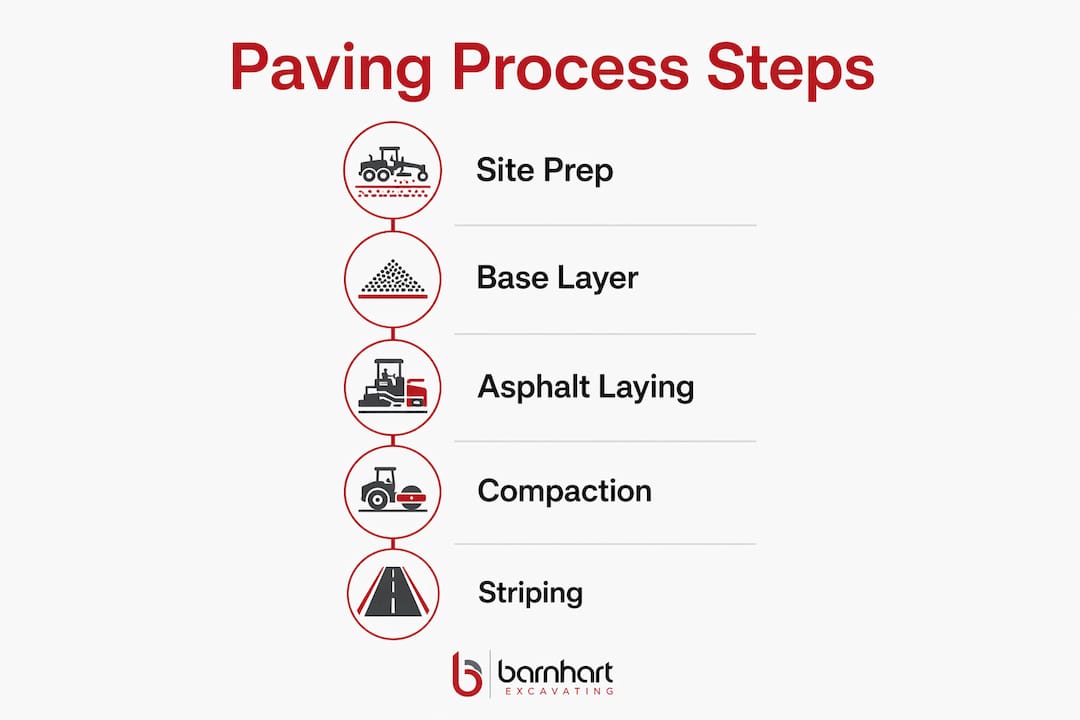
What does the paving process look like from start to striping?
A commercial paving project runs: site prep and utility coordination → subgrade grading and compaction → aggregate base placement → tack coat → HMA binder lift → HMA surface lift → compaction → cure → striping. Each phase has dependencies that, if skipped or rushed, shorten pavement life.
-
Utility and drainage coordination: Confirm all underground utilities are marked and any storm sewer or drainage work is complete before grading begins.
-
Subgrade preparation: Proof-roll and compact the subgrade. Soft or pumping areas require undercut and replacement before base goes down.
-
Aggregate base placement: Spread and compact crushed aggregate to the engineered depth, typically 6–8 inches for commercial lots.
-
Tack coat application: Apply a thin asphalt emulsion to bond lifts together. Skipping this step causes delamination.
-
HMA binder lift: Place and compact the binder course per lift thickness specs of 1.5–3.0 inches.
-
HMA surface lift: Place the finish course while the binder is still warm enough to bond.
-
Compaction: Achieve target density while the mix is hot. Density cannot be recovered once the mat cools.
-
Cure and striping: Allow 24–48 hours before light traffic; 5–7 days before line striping for best adhesion.
Permitting and ADA checklist to address before mobilization:
-
Verify local permit requirements (grading, impervious surface, stormwater)
-
Confirm ADA stall count (1 per 25 spaces up to 100, per ADA Standards)
-
Check cross-slope limits (2% maximum for accessible routes and stalls)
-
Confirm accessible route continuity from stalls to building entrance
-
Include van-accessible stalls (1 in 6 accessible spaces must be van-accessible)
Optimal paving temperatures run 50°F–85°F with no rain in the forecast. In the Midwest and South, that window runs April through October. Schedule tenant notifications and access restrictions at least two weeks out for any lot serving active businesses.
How do pavement design and materials determine long-term cost?
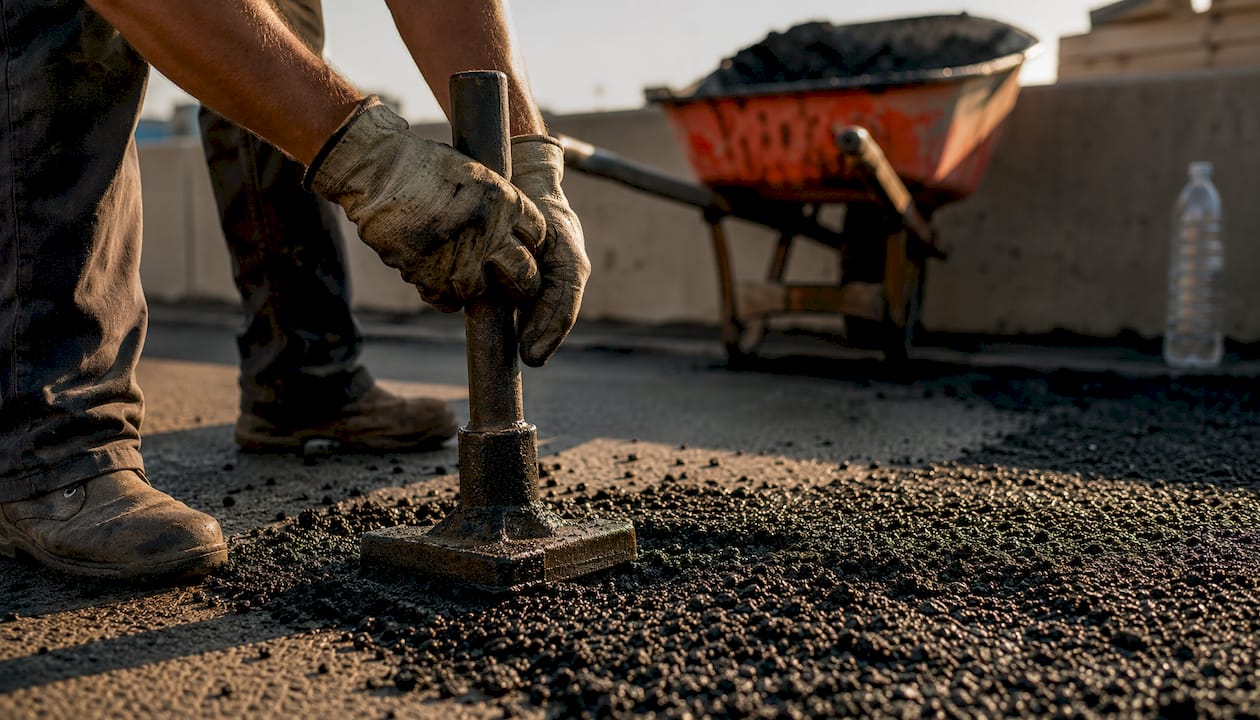
Parking lots are routinely under-designed relative to the buildings they serve, and that under-design is the single largest driver of premature failure and high maintenance costs. An engineered pavement section from a licensed PE costs a fraction of one premature replacement.
| Traffic Type | HMA Thickness | Aggregate Base | Notes |
|---|---|---|---|
| Light-duty (passenger cars only) | 1.5–3.0 in (2 lifts) | 6 in compacted | Small lots under 50 stalls |
| Typical commercial | 4 in (2 in binder + 2 in surface) | 8 in compacted | Standard retail/office |
| Heavy-truck/loading dock | 5–6 in (multiple lifts) | 10–12 in compacted | Delivery routes, dumpster pads |
Compaction is where most quality failures occur. Plan for 1.5–3.0 in lifts and require density testing during placement. Asphalt that cools before reaching target density stays permanently under-compacted, allowing water infiltration and accelerated oxidation.
Drainage design is equally critical. Minimum 1.5–2% cross-slope prevents ponding. Integrate curb and gutter, inlet locations, and any underdrains into the design before paving begins. Porous asphalt is a viable stormwater option for sites where a detention basin would otherwise be required; it requires a properly designed granular reservoir layer and can achieve a 20+ year lifespan with correct maintenance.
Pro Tip: Require the job-mix formula, compaction targets, and lift sequencing plan in writing before work starts. Specification detail is your primary defense against low-density placements and short service life.
What does asphalt parking lot paving actually cost in 2026?
Project size drives per-sqft cost more than unit material prices. Mobilization and crew minimums are largely fixed, so they amortize very differently across a 5,000 sqft lot versus a 75,000 sqft lot.
| Lot Size | Installed Cost Range | Mobilization Share | Notes |
|---|---|---|---|
| Small (~5,000 sqft) | $5.50–$7.50/sqft | 15–20% | High mobilization impact |
| Medium (15k–30k sqft) | $1–$3/sqft | 5–10% | Typical retail/office |
| Large (75k+ sqft) | $2.70–$3.80/sqft | 1–2% | Campus/industrial |
For a mid-size 20,000 sqft lot, expect a total project cost of roughly $70,000–$125,000 before permits and contingencies.
Practical budgeting checklist:
-
Add 10–15% contingency for subgrade surprises
-
Budget $1,000–$7,000 for striping depending on stall count and ADA requirements
-
Include $500–$6,000 for permits (location-dependent)
-
Allow for wheel stops, signage, and curb work as separate line items
-
Regional labor and material costs can swing totals 10–25% from national averages
Statistic: A double-lift commercial section adds some upfront cost but reduces per-year lifecycle cost significantly for owners holding the property long term.
How should you maintain your lot to avoid early replacement?
Modest, consistent maintenance is far less expensive than deferred repairs. A lot that receives no attention for 10 years often requires full-depth replacement at 3–4 times the cost of the maintenance that would have prevented it.
Staged maintenance schedule:
-
Years 0–3: Inspect annually. Fill any cracks wider than 1/4 inch with hot-pour crack sealant.
-
Years 3–5: First sealcoat application ($0.25–$0.75/sqft). Protects against UV oxidation and fuel spills.
-
Years 5–10: Second sealcoat cycle. Address any localized failures with infrared or saw-cut patches.
-
Years 10–15: Evaluate for mill-and-overlay. If surface cracking is widespread but base is sound, overlay extends life another 10–12 years.
-
Years 15–25+: Full-depth replacement if base failure is present; overlay if structure remains intact.
Pro Tip: FHWA guidance recommends budgeting 2–3% of facility asset value annually for pavement maintenance. Most property owners budget closer to 0.5%. Close that gap and you’ll avoid the structural failures that turn a $0.40/sqft treatment into a full replacement.
How do you choose the right paving contractor?
Require an engineered pavement section and itemized bids before you evaluate price. A single lump-sum bid for “asphalt paving” tells you nothing about what you’re actually buying.
Required bid elements:
-
Job-mix formula and Superpave mix designation
-
Compaction targets and density testing plan
-
Lift sequencing and thickness plan
-
Equipment list (paver model, roller tonnage, crew size)
-
Mobilization fee listed separately
-
Warranty terms in writing (workmanship and materials)
Paperwork to verify before signing:
-
State contractor license and current insurance certificates
-
Surety bond for projects over your threshold
-
References from comparable commercial projects
-
Sample scope-of-work language and project portfolio
Red flags in bids:
-
Vague specs (“install asphalt as needed”)
-
No base work or subgrade prep listed
-
Missing compaction targets
-
No itemized mobilization fee
-
Zero references or portfolio
When evaluating concrete and paving contractors, always request a site visit before finalizing scope. Owners who include site access rules, staging areas, and coordination expectations in their RFP avoid the majority of change orders.
What do real cost scenarios look like by lot size?
Three worked examples show how scope choices change the math.
| Scenario | Lot Size | Stalls | Scope | $/sqft Installed | Approx. Total |
|---|---|---|---|---|---|
| Small office lot | 5,000 sqft | ~15 | Full replacement | $2–$4.50 | $70,000–$125,000 |
| Retail lot | 20,000 sqft | ~75 | Full replacement | $1–$3 | — |
| Campus/industrial | 75,000 sqft | approximately 100–200 | Full replacement | $2.70–$3.80 | — |
Key assumptions and sensitivities:
-
All scenarios assume 4 in HMA (two lifts) over 8 in compacted base
-
Adding 2 in of HMA increases material cost roughly $0.80–$1.20/sqft but extends service life by 5–8 years
-
Poor lot geometry (narrow aisles, tight corners) can add 6–12% to total cost through reduced paving efficiency
-
ADA upgrades, wheel stops, and signage typically add $3,000–$10,000 depending on stall count
-
Regional labor variation can shift these totals 10–25% in either direction
How does Barnhart Excavating handle parking lot projects?
Barnhart Excavating delivers end-to-end commercial paving for property owners and developers across Tulsa and surrounding areas, covering site evaluation, engineered pavement section coordination, earthwork, base construction, HMA placement, striping, and workmanship warranty.
Why owners choose Barnhart Excavating:
-
80+ years of contractor experience in excavation, earthwork, and asphalt construction
-
Licensed crews with current insurance and bonding
-
Project portfolio spanning commercial, municipal, and industrial sites
-
Local municipal experience including City of Tulsa permitting and water meter coordination
-
Single-contractor coordination of utilities, grading, and paving to minimize mobilizations and control costs
Browse completed local project examples and request references from comparable commercial lots in the Tulsa area.
Key Takeaways
A well-designed, properly maintained asphalt parking lot delivers 25–30 years of service life when built to commercial double-lift standards and maintained on a consistent schedule.
| Point | Details |
|---|---|
| Require engineered specs | Demand a licensed PE pavement section and itemized bids before comparing prices. |
| Double-lift pays off | 4 in HMA over 8 in base adds $2.00–$2.80/sqft upfront but cuts per-year cost by ~35% over 15+ years. |
| Budget maintenance realistically | FHWA recommends 2–3% of asset value annually; most owners budget closer to 0.5% and pay for it later. |
| Bundle mobilizations | Coordinate utilities, grading, and paving in one continuous sequence to reduce fixed overhead costs. |
| Barnhart Excavating | Provides full-scope commercial paving in Tulsa, from earthwork and base through HMA placement and striping. |
The case for building it right the first time
The most expensive parking lot is the one that gets replaced twice. Property owners consistently underestimate how much the pavement section design, not the surface finish, determines long-term cost. A lot that looks fine at year five but was built on a thin base and under-compacted lifts will fail structurally by year ten, requiring full removal and replacement at two to three times the cost of doing it right initially. The math on engineered design and planned maintenance is not complicated. It is just rarely followed. After more than 80 years of working on commercial sites across this region, the pattern is clear: owners who invest in a proper pavement section and stick to a maintenance schedule spend far less over the life of the asset than those who chase the lowest bid.
Ready to get a site evaluation and written scope?
Barnhart Excavating’s concrete and asphalt services cover the full scope of commercial parking lot work, from initial site grading and earthwork through base construction, HMA paving, and final striping. When your project requires underground utility coordination or City of Tulsa water meter work, that’s handled in-house as well, keeping your mobilization count low and your schedule tight.
Request a site visit and you’ll receive a written scope, a rough budget band, and a recommended pavement section based on your actual traffic loads and subgrade conditions. Licensed, insured, and backed by a portfolio of completed commercial projects across the Tulsa area. Contact Barnhart Excavating to schedule your evaluation.
Useful sources and further reading
Authoritative references for owners who want to verify design specs and cost models:
-
MAPA Asphalt Parking Lot Design Guide — mix selection, compaction specs, and lift thickness guidance
-
CAPA Parking Lot Design Guide, 2nd Edition — licensed PE design requirements and under-design consequences
-
CAPA Asphalt Parking Lot Design and Construction Guide — Superpave mix guidance for parking lot applications
-
WAPA 2018 Asphalt Parking Lot Design Guide — traffic classification, subgrade design, and construction inspection checklist
-
Buildcalchub Parking Lot Paving Cost Guide — per-sqft ranges, mobilization economics, and lifecycle cost comparisons
-
Buildcalchub Asphalt Cost Per Square Foot Guide — regional cost variation and scope-size effects
-
The Asphalt Pro: Best Practices for Low-Volume Parking Lots — FHWA maintenance budgeting guidance and deferred-maintenance consequences
-
Current Cost: Asphalt Parking Lot Cost Guide — U.S. regional pricing ranges and cost component breakdowns
-
TruTec: Parking Lot Paving Cost Per Space — per-stall cost math and overlay vs. full-depth comparison
FAQ
How thick should asphalt be in a commercial parking lot?
The standard commercial section is 4 inches of HMA in two lifts (2 in binder + 2 in surface) over 8 inches of compacted aggregate base. Heavy-truck or loading dock areas require 5–6 inches of HMA over 10–12 inches of base.
What does asphalt parking lot paving cost per square foot in 2026?
Installed costs range from $2.70–$3.80/sqft for large lots (75,000+ sqft) to $5.50–$7.50/sqft for small lots around 5,000 sqft, with mobilization accounting for the bulk of that difference.
How often does a parking lot need sealcoating?
Sealcoating every 2–4 years protects against UV oxidation and fuel spills, typically running $0.25–$0.75/sqft, and is one of the most cost-effective treatments in a parking lot asphalt maintenance program.
When should you choose overlay versus full-depth replacement?
Choose a mill-and-overlay when the existing base is structurally sound and surface distress is limited. Full-depth replacement is necessary when alligator cracking, widespread rutting, or base failure is present.
Can Barnhart Excavating handle permitting and utility coordination?
Yes. Barnhart Excavating manages City of Tulsa permitting, utility coordination, and water meter work in-house, allowing property owners to run site prep, base construction, and paving under a single contractor without managing multiple mobilizations.