
Trenches 5 feet deep or greater require a protective system. Trenches 20 feet deep or greater require one designed by a registered professional engineer. A competent person must inspect the trench before every shift and after anything changes conditions underground. Here’s what you need to confirm before a single worker steps below grade:
-
Protective systems: sloping, benching, shoring, or shielding at 5 ft; engineer-designed systems at 20 ft
-
Egress: ladder, stairs, or ramp required at 4 ft, positioned within 25 ft of lateral travel
-
Daily inspections: competent person checks before each shift and after rain, vibration, or any hazard-increasing event
-
Spoil setback: excavated material and equipment kept at least 2 feet from the trench edge
-
Atmosphere testing: required in trenches over 4 ft where oxygen deficiency or toxic gas is a possibility
These aren’t suggestions. They’re the baseline OSHA 29 CFR 1926 Subpart P requires, and they’re the difference between a routine dig and a fatality investigation.
TL;DR:
Soil testing and proper classification are essential, as visual assessments are often incorrect and misclassification can lead to deadly collapses.
Using the correct protective system depends on soil type, depth, and site constraints, with engineer-designed solutions needed at 20 feet or more.
Daily inspections by a trained competent person are mandatory before each shift and after any hazard-increasing event, not just a routine check.
Spoil, equipment, and materials must stay at least 2 feet away from the trench edge to prevent destabilizing the walls or causing falls.
Avoid trench entry when possible with methods like directional boring or pipe relining, eliminating the risk of cave-ins altogether.
Table of Contents
-
What Barnhart Excavating Has Learned From Decades of Trench Work
-
The Gap Between Knowing the Rules and Running a Compliant Site
What Makes Trench Excavation Safety So Critical?
Cave-ins kill because dirt is heavier than most crews realize. A single cubic yard of soil can weigh several thousand pounds, roughly the weight of a small car, and it moves fast once it lets go. There’s no bracing yourself against that kind of load, and there’s rarely a second chance once a wall fails.
Cave-ins are the primary hazard in trench work, but they’re far from the only one. Crews also face:
-
Struck-by incidents from swinging equipment or falling spoil
-
Falls into open excavations, especially at night or on congested sites
-
Hazardous atmospheres in confined or deep trenches
-
Water accumulation that weakens trench walls and softens soil
-
Unmarked or damaged underground utilities
Conditions change fast underground. Rain, nearby vibration from equipment or traffic, surcharge loads stacked too close to the edge, and visible soil movement are all signals that a trench which was safe an hour ago may not be safe now. The CDC’s NIOSH trenching guidance is blunt about this: most trench failures start small, as localized soil shifting, before they become catastrophic.
What Does OSHA Require for Trench Safety?
OSHA’s trenching standard isn’t vague. It gives you exact numbers, and knowing them cold is part of running a compliant site.
-
5 feet: protective system required (sloping, benching, shoring, or shielding), per 29 CFR 1926.652
-
20 feet: excavations deeper than 20 feet require protective systems designed or approved for those conditions by a registered professional engineer.
-
4 feet: safe means of egress required, with no more than 25 feet of lateral travel to reach it
-
2 feet: minimum setback for spoil piles, materials, and equipment from the trench edge
-
Atmospheric testing: required whenever oxygen deficiency, flammable gas, or other hazardous atmospheres are possible
A trench that looks stable at 8 a.m. can fail by noon if it rains, if a loaded truck idles nearby, or if the soil classification was wrong from the start. The numbers in Subpart P exist because inspectors have seen exactly how fast that transition happens.
OSHA's eTool for trenching and excavation also covers soil classification and sloping and benching tables in more depth than we can here, and it’s worth keeping bookmarked on any phone that’s on your crew.
Which Protective System Should You Use?
Not every trench calls for the same fix. The right system depends on soil type, depth, water table, and how much room you have on site.
-
Sloping cuts the trench wall back at an angle appropriate to the soil classification. It works well on open sites but eats up space you may not have in a tight lot.
-
Benching creates a series of horizontal steps. It’s a solid option in Type A and Type B soils but is not permitted in Type C soils, where the material is too unstable to hold a stepped cut.
-
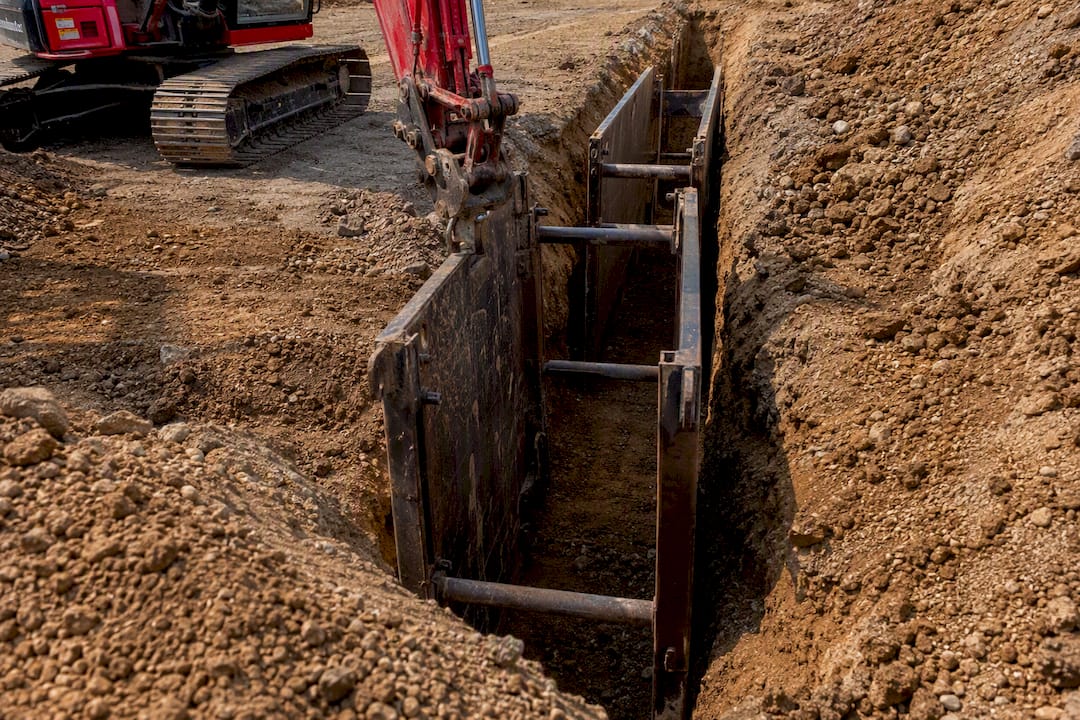
Shoring (timber, hydraulic, or aluminum hydraulic systems) braces the trench walls directly. Hydraulic shoring is faster to install and remove than timber, which matters on jobs with multiple trench openings in a day.
-
Shielding, most commonly trench boxes, protects workers inside the box rather than preventing the collapse itself. A box doesn’t stabilize the surrounding soil, so an engineer may still need to sign off when depth, soil, or nearby loads push past standard tables.
Sometimes the smartest protective system is avoiding entry altogether. Directional boring and pipe relining let you install or repair a utility line without a worker ever going below grade, which eliminates the cave-in risk instead of just managing it.
Pro Tip: Check the manufacturer’s tabulated data and actual field conditions before putting a trench shield into service. Depth, soil conditions, surcharge loads, and installation all matter.
Who Qualifies as a Competent Person on a Trench Job?
A competent person is someone with the training, field experience, and authority to identify existing and predictable hazards, and the standing to stop work immediately when they see one. This role can’t be handed off casually. It’s a daily, non-delegable responsibility that includes inspecting the trench, adjacent areas, and protective systems before each shift and after any event that could increase hazard exposure, whether that’s overnight rain, nearby blasting, or a piece of equipment parked too close to the edge.
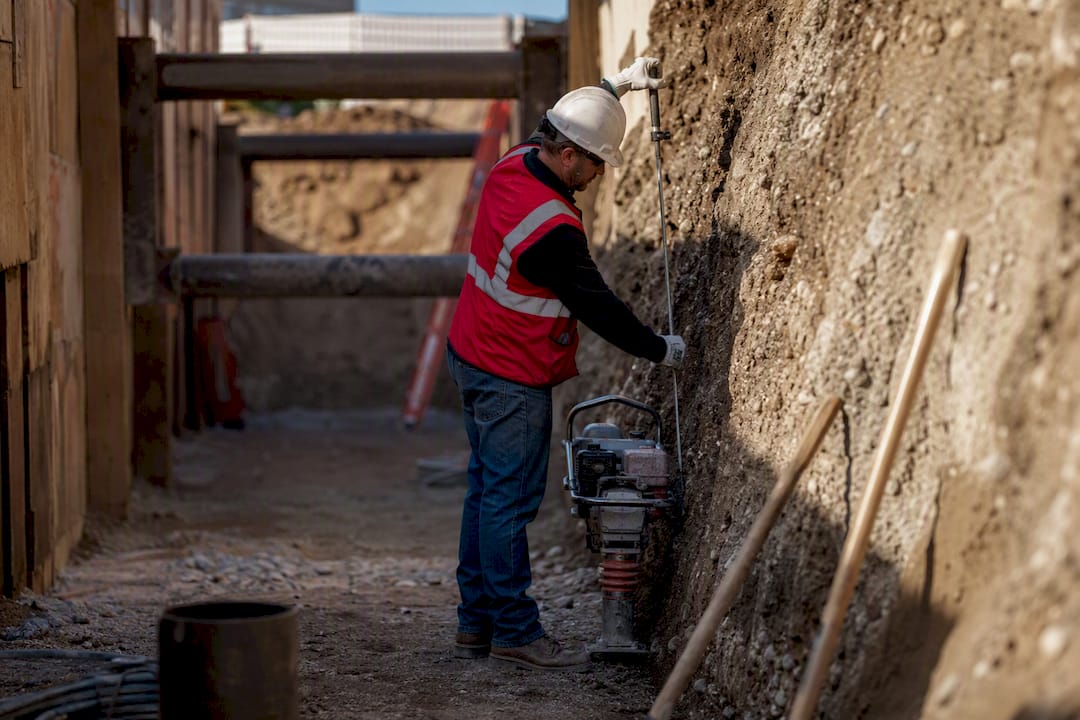
Soil classification trips up more crews than almost anything else on this list. Soil classification should not be based on appearance alone. OSHA’s soil classification method uses both visual and manual analysis by a competent person. Manual soil testing confirms what your eyes might miss, and misclassifying Type C soil as Type B is a documented contributor to fatal collapses.
Good documentation can help keep the field and office on the same page. Depending on the contractor and project requirements, that may include a trenching plan, inspection records, and documentation of corrective actions.
Pro Tip: Have the competent person walk the site and sign off on the work plan before the excavator ever breaks ground, not after the first bucket of dirt comes out.
How Do You Prepare a Trench Site Before Digging Begins?
Good trench work is decided before the machine arrives. Run this sequence on every job:
-
Call 811 and confirm utility marks in the field, then plan how you’ll support or protect any lines running near or through the excavation. Barnhart Excavating handles this kind of utility coordination as a standard part of pre-job planning on every trenching project.
-
Set spoil and material placement at least 2 feet from the edge, or use retaining devices tied into shoring when site constraints make that setback impractical.
-
Route equipment paths away from the trench edge to reduce surcharge loading on the walls.
-
Plan for water control. Pumps, dikes, or diversion ditches should be in place before a storm hits, not scrambled together after. Assign someone to monitor pumps continuously during active dewatering.
-
Post an emergency action plan and stage any rescue equipment the site’s hazard assessment calls for.
What Rescue Equipment Should Be On Site?
Certain conditions demand rescue gear staged and ready before anyone enters the trench, not stored somewhere back at the yard. Rescue equipment must be readily available where hazardous atmospheric conditions exist or may reasonably be expected to develop. OSHA also has specific requirements for certain deep confined excavations such as bell-bottom pier holes.
-
Harnesses and lifelines for confined excavations, kept separate from material-handling lines
-
Retrieval systems positioned and tested before entry, not after an incident starts
-
Breathing apparatus staged wherever atmospheric testing shows a risk
Know the red flags that mean stop work immediately: visible cracks in the trench wall, water seeping in where it wasn’t before, any sign the protective system is shifting or failing, or a failed inspection that hasn’t been corrected. None of these are judgment calls you make later. They’re immediate.
What Training and PPE Does Trench Work Require?
Training has to go beyond a signature on a form. Crews need to understand hazard recognition, how the protective systems on their specific site actually work, the emergency plan, and correct use of shoring or trench boxes before they’re anywhere near an open excavation.
-
Hard hats, high-visibility clothing, protective boots, and gloves for every worker at the excavation
-
Respiratory protection and ventilation equipment when atmospheric testing indicates a need
-
Hands-on verification of competence, not just classroom time
-
Scheduled refreshers, especially after a near-miss or a change in site conditions
What Barnhart Excavating Has Learned From Decades of Trench Work
Years of underground utility and earthwork experience teach you that the paperwork and the field work have to match. Barnhart Excavating has built its reputation on projects ranging from municipal water meter installations to large-scale earthwork, and the trenches that go smoothly are the ones where the work plan gets checked before the bucket touches dirt, not after.
A few things we’ve found matter more than they get credit for:
-
Sequence your competent person’s check before the equipment operator’s first cut, every time, no exceptions
-
On tight urban lots where the 2-foot setback isn’t realistic, document a retained-device design in the work plan and get an engineer involved early
-
If soil conditions or depth push past standard OSHA tables, call a registered professional engineer before you improvise
Trench excavation safety isn’t a solo effort. The most effective protective system is a compliant site, an inspected trench, and a properly trained crew, all working from the same plan.
Key Takeaways
Trench excavation safety depends on hitting OSHA’s numeric thresholds for depth, egress, and setback, backed by competent-person inspections and proper job planning.
| Point | Details |
|---|---|
| Protective system triggers | Required at 5 ft; engineer-designed systems required at 20 ft or deeper. |
| Egress access | Ladder, stairs, or ramp required at 4 ft, within 25 ft of lateral travel. |
| Spoil and equipment setback | Keep excavated material and equipment at least 2 ft from the trench edge. |
| Inspection cadence | Competent person inspects before each shift and after any hazard-increasing event. |
| Barnhart Excavating’s role | Provides earthwork and underground utility services for commercial and municipal projects across the Tulsa area. |
The Gap Between Knowing the Rules and Running a Compliant Site
Most trench safety content stops at reciting OSHA numbers, and that’s part of the problem. Every contractor knows the 5-foot rule exists. Fewer treat the competent person’s daily inspection as the non-negotiable it actually is, especially on smaller jobs where the pressure to keep digging outweighs the ten minutes it takes to walk the trench after a rain shower.
The conventional advice tells crews to “follow OSHA guidelines.” That’s true and mostly useless. What actually prevents cave-ins is sequencing: work plan approved, utilities confirmed, spoil placed correctly, and inspection signed off, all before the first cut. Skip the sequence and the numbers in Subpart P don’t save you, because by the time someone’s testing the atmosphere or checking the shoring, the trench has already been open and unprotected for however long it took to remember.
If there’s one thing worth changing about how crews approach this, it’s treating soil classification as a formality instead of a judgment call that requires actual testing. Visual assessment gets it wrong often enough that it shows up in fatality investigations year after year. Test the soil. Document it. Then dig.
Plan Your Trench and Utility Work With Barnhart Excavating
Meeting OSHA’s trench safety requirements takes more than a checklist. It takes a contractor who plans utility coordination, soil handling, and protective systems before equipment ever touches the site, and who has the field experience to know when a job needs an engineer’s sign-off instead of a standard trench box. That’s the gap Barnhart Excavating fills for developers, contractors, and municipalities across the Tulsa area.

Barnhart Excavating builds the trench work plan into the project from day one rather than treating it as paperwork to file after the fact. Whether you’re coordinating a municipal water meter installation or need engineered earthwork services for a commercial development, our crews plan trenching, utility coordination, soil handling, and site conditions as part of the work from the beginning. If your next project involves trenching, request a quote through our contact us page and let’s talk through the site conditions before you break ground.
Sources
Keep these in the site safety binder for quick reference:
FAQ
How Far Does a Ladder Need to Be From Workers in a Trench?
For trenches 4 feet or deeper, OSHA requires a stairway, ladder, ramp, or other safe means of egress positioned so employees do not have to travel more than 25 feet laterally to reach it.
What Does OSHA Require for Trench Safety?
OSHA requires a protective system at 5 feet, an engineer-designed system at 20 feet, safe egress within 25 feet of lateral travel at 4 feet, and daily inspections by a competent person before each shift.
What Are the Major Hazards in Trench Work?
The primary hazards are cave-ins, struck-by incidents, falls, hazardous atmospheres, and water accumulation, with underground utility strikes as an added risk during digging.
At What Depth Does OSHA Require a Trench Box?
A protective system, which can include a trench box, is required at 5 feet or deeper; trenches 20 feet or deeper need a system designed by a registered professional engineer rather than a standard box alone.
Who Can Perform Trench Inspections on a Jobsite?
Only a designated competent person, someone with the training and authority to identify hazards and stop work, can perform the required daily inspections and after hazard-increasing events like rain or nearby vibration.