Yes, call 811 or submit a request online before any digging. It connects you to your state’s One-Call center, which notifies every affected utility so they can mark buried lines before your shovel or excavator gets near them. The service is free to the excavator, and skipping it puts you at risk of striking gas, electric, or water lines, plus potential legal liability in most states.
TL;DR:
Utility marking generally covers public utility lines but does not include private lines from the utility connection to the property or other private systems.
Notice requirements vary by state. In Oklahoma, excavators must contact OKIE811 at least three business days before digging. Always confirm the required notice period with your state’s 811 center.
Confirm that all utility responses are positive before using mechanized equipment near marked lines. Tolerance zones vary by state; in Oklahoma, hand dig within 24 inches of the marks until the facility is exposed.
If utility marks are delayed, missing, or incorrect, verify your ticket, report the problem, and consider private locating services to identify private lines outside 811 coverage.
Professional coordination ensures proper ticket submission, response verification, and documentation, reducing the risk of utility strikes and project delays.
Table of Contents
How Do You Request an 811 Utility Locate?
Requesting a locate is straightforward, but the details matter. A rushed or vague ticket is one of the most common reasons a project gets delayed by a missed line or a callback for clarification. Here’s the process from start to finish.
-
Mark your dig site first. Outline the work area with white paint or white flags so the locator technician knows exactly where to look. Skip this step and you risk a locator marking the wrong section of your property.
-
Contact your state’s center. Dial 811 or use your state's 811 website to submit the request online. Both routes ask for the same core information.
-
Provide the details. Have your exact address, cross streets or directions, the type of work planned (fence post, pool excavation, sewer repair, etc.), and your intended start date ready.
-
Get your ticket number. Write it down immediately. This number is your record that you followed the law and your reference point if anything goes wrong later.
-
Wait the required notice period. Most states require at least two to three business days between your request and your start date, though Texas811 and other centers note this can vary.
-
Submit a new ticket if plans change. A bigger dig footprint, a delayed start date, or an expired ticket all require a fresh request rather than an amendment to the old one.
What Will 811 Mark, and What Won’t It Cover?
The one-call system marks public utility infrastructure, meaning the mains and distribution lines owned by member utility companies. What it typically will not mark are the private lines running from the utility connection point to your house or building.
-
Covered: gas mains, electric distribution lines, water mains, and telecom lines owned by participating utilities.
-
Usually not covered: the line running from your water meter to your house, irrigation systems, septic lines, and any private line installed by a previous owner or contractor.
-
Your responsibility: private lines fall on the property owner to locate, often through a private locating company.
If your project involves digging anywhere between the meter and the structure, plan on hiring a private locator in addition to your 811 ticket. Skipping that step is how homeowners end up cutting their own water or sewer line.
What Happens After You Call 811?
Once your ticket is submitted, the affected utilities have a window to respond. Two to three business days is the standard notice period most state centers use, though some vary the exact rule.
Two to three business days. That’s the industry benchmark for utility response after your locate request goes in, though check your state center for exact requirements since rules differ by state.
-
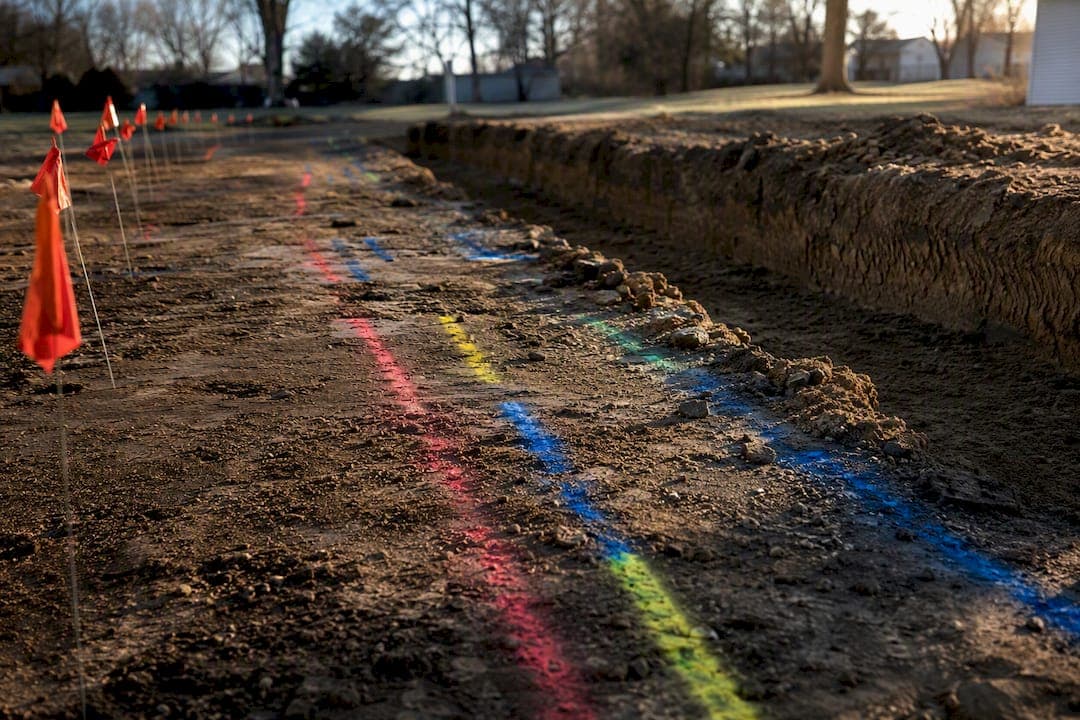
Locators use color-coded paint or flags following APWA conventions, so red typically marks electric, yellow marks gas or oil, blue marks water, and green marks sewer lines.
-
Before you dig, check your ticket for a Positive Response from every utility notified. No response means no confirmed clearance.
-
Save your ticket number. It’s your proof of compliance and the number you’ll use to check status or report a problem.
Don’t treat the marks as decoration. Each color tells you what’s below and how close you can safely get with equipment.
How Close Can You Dig to Marked Utilities?
Marked lines aren’t a precise line in the sand. Locating technology has a margin of error, which is why the industry relies on a tolerance zone rather than treating a paint stripe as an exact boundary.
Pro Tip: Tolerance zones vary by state. In Oklahoma, hand dig within 24 inches of the marks until the underground facility is exposed. Never assume the paint or flags show the exact location or depth of a utility.
-
Stop mechanized digging the moment you enter the tolerance zone and switch to hand tools.
-
Refresh marks that fade or get disturbed by rain, foot traffic, or earlier digging before continuing work.
-
Some states, such as Georgia’s 811 Service, recommend hand-exposing the line and confirming its exact position before equipment operates anywhere near it.
-
Coordinate with your locator technician on-site when possible, and photograph marks for your project file in case questions come up later.
What If Locates Are Late, Missing, or Wrong?
Not every ticket goes smoothly. Marks sometimes never show up, or they show up in the wrong spot. Here’s what to do instead of guessing.
-
Use your ticket number to report a no-response. Contact your state 811 center and request a re-mark rather than proceeding without confirmation.
-
Document the problem. Photograph missing or inconsistent marks with timestamps, and hold off on digging until it’s resolved.
-
Escalate to the state regulator if needed. Agencies like the Washington Utilities and Transportation Commission outline how to file a report when a utility fails to respond or a locate is inaccurate.
-
Bring in a private locator when private utilities may be present that are outside the One-Call system’s scope. A private locate does not replace the required response from facility owners on an active 811 ticket.
Do 811 Rules Change From State to State?
They do, and the differences matter more than most people assume. The FCC designated 811 as the national abbreviated dialing code back in 2005, but each state runs its own One-Call center and sets its own notice periods, ticket lifespans, and penalties.
-
Most states require notification before excavation, but the exact notice window and enforcement mechanism vary by state, often requiring a notice period of at least two to three business days.
-
Some states carry real financial penalties for excavating without a valid ticket; others rely more heavily on civil liability after a strike.
-
Check your state’s 811 center directly for exact rules, and note your state regulator’s contact information in case you need to escalate a dispute.
If you’re digging in Oklahoma, that means confirming Oklahoma’s specific notice period and ticket validity window rather than assuming another state’s rules apply.
A Contractor’s Checklist for Coordinating Locates
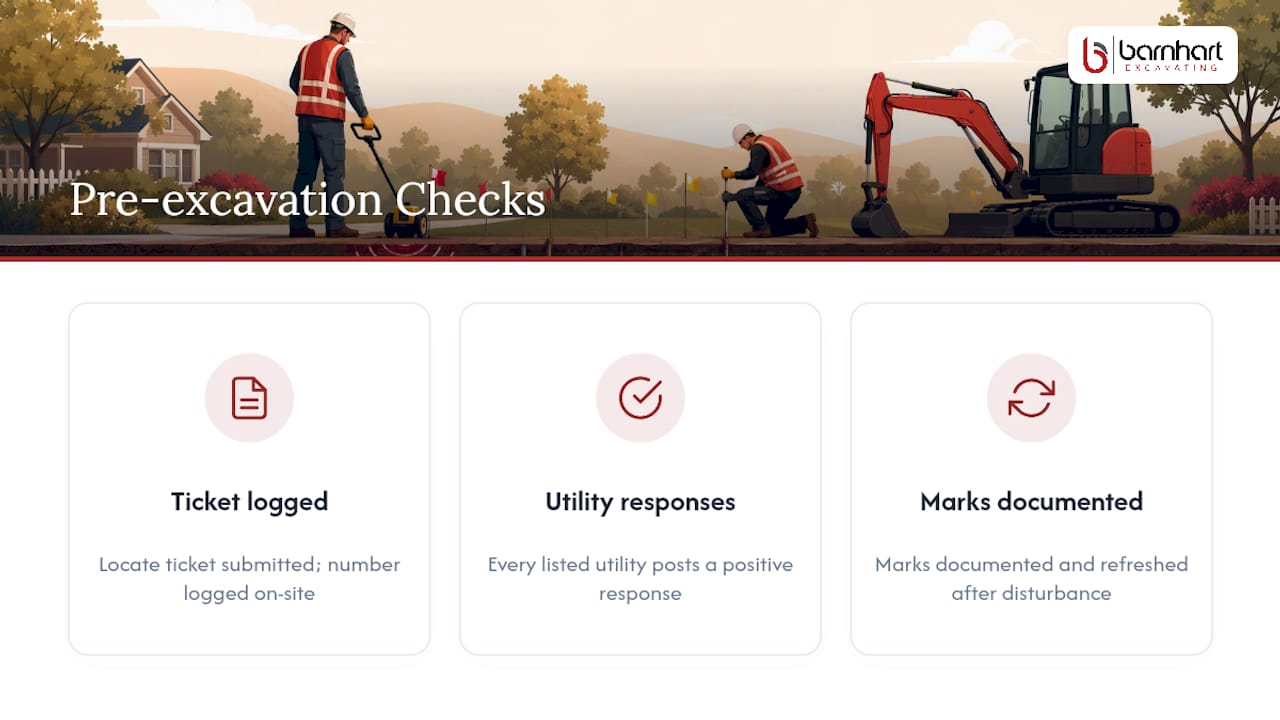
Professional job sites carry more moving parts than a homeowner’s backyard project, which means more places for a locate ticket to slip through the cracks. Before mechanized work starts on any excavation project, crews confirm three things: that a ticket has been submitted and its number is logged on-site, that every listed utility has posted a positive response, and that marks are documented and refreshed if weather or earlier work disturbs them.
Coordinating utility installation work often means syncing locate tickets with municipal requirements too, including City of Tulsa water meter requests when a project touches city-owned infrastructure. That kind of coordination is where experience pays off. It’s also where a lot of DIY timelines quietly fall apart.
Let Barnhart Excavating Handle the Locate Coordination
Calling 811 gets utilities marked, but managing that process alongside grading, trenching, and permitting on a commercial or complex residential dig is a full job on its own. Barnhart Excavating is the alternative to juggling that coordination yourself: on excavation and underground utility projects, locate coordination is one of the steps that has to be managed alongside scheduling, access, grading, trenching, and other field conditions.
Hiring a contractor makes the most sense once a project moves past a simple fence post or mailbox hole, especially anything involving private service lines, city permitting, or utility installation work where the margin for error shrinks fast. The company handles earthwork and utility installation projects across the Tulsa area, and if your job involves a new connection, there is a water meter estimate request page to initiate that process. If you’re planning a dig that’s bigger than a backyard project, request a project estimate and let us handle the coordination from the first call to the last shovel of dirt.
Sources
-
Use of N11 Codes and Other Abbreviated Dialing Arrangements | FCC
-
What Is 811? Understanding the Utility Locate Service | Texas811
-
Call Before You Dig | Washington Utilities and Transportation Commission
FAQ
Does 811 Work in All States?
Yes, 811 is the national dialing code that routes to a One-Call center in every state, but each center sets its own notice periods, ticket rules, and penalties, so check your state’s specific requirements.
Can I Dig on My Own Property Without Calling 811?
No. Underground utility lines run through private property too, and most states require notification before any excavation regardless of who owns the land, since a strike can cut off service to your entire neighborhood.
What Is the Best Way to Locate Underground Utilities?
An 811 ticket is the first step for utilities owned or operated by participating facility owners. Private lines, such as irrigation, septic systems, or certain lines beyond the meter, may require a private utility locating company.
Does 811 Cost Money?
No, submitting an 811 locate request is free to the excavator. Member utilities fund the One-Call system, so there’s no charge for calling or submitting online.