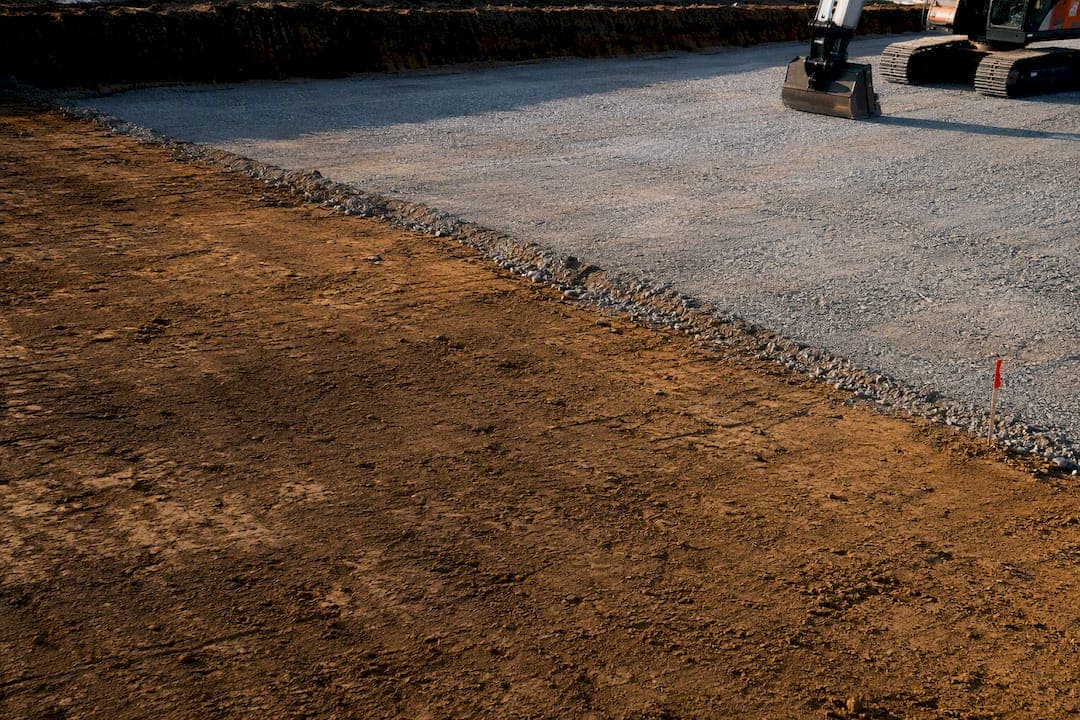
Choose between undercut and granular replacement, chemical treatment, or mechanical reinforcement with geosynthetics based on CBR, plasticity index, organic or sulfate content, project requirements, and geotechnical recommendations, then verify the approach with appropriate testing. Very weak subgrades may call for undercut and replacement, chemical stabilization, or a combination of methods, while geosynthetics can be effective in reinforcing weak subgrades when properly designed. High-plasticity, organic, or sulfate-bearing soils require additional evaluation before selecting a treatment method. A successful stabilization plan should be supported by testing, project specifications, and measurable acceptance criteria.
TL;DR:
Very weak subgrades may require undercutting, chemical stabilization, or a combination of stabilization methods, with the final approach based on testing and project requirements.
Geosynthetics can be effective for weak subgrades, particularly where schedule, weather, or site conditions make other methods less practical.
Proper stabilization relies on accurate lab and field analysis, including strength, moisture-density, and soil chemistry testing where applicable.
For unsuitable, organic, contaminated, or otherwise problematic soils, undercut and replacement with suitable material may be the most practical option.
Careful sequencing, drainage, moisture control, compaction, and appropriate field verification are key to successful subgrade stabilization.
Table of Contents
-
What Lab and Field Tests Confirm a Stabilization Design Works?
-
What Barnhart Excavating Has Learned Stabilizing Subgrades in the Field
What Are the Main Subgrade Stabilization Methods?
Most subgrade problems involve soil that either needs to be removed and replaced or improved in place. Contractors sometimes blur the line between “modification” and “stabilization,” but the distinction matters. Modification generally improves a soil’s workability or construction properties, while stabilization is intended to improve engineering properties such as strength, stiffness, or moisture resistance.
The primary method families are:
-
Undercut and replace. Remove unsuitable soil and backfill with select granular material or aggregate base course.
-
Chemical stabilization. Mix cement, lime, or fly ash into the existing soil to bind particles and raise strength.
-
Mechanical reinforcement. Install geotextiles or geogrids to separate, filter, and confine soil layers without changing soil chemistry.
-
Drainage and moisture control measures. Manage water that could weaken the subgrade or reduce the effectiveness of the selected stabilization method.
Schedule impact can vary significantly between these methods. Undercut and replacement can move quickly when hauling and suitable fill are readily available, but disposal and import costs increase with depth and haul distance. Chemical stabilization requires proper mixing, compaction, and curing, which can affect the schedule depending on the material, weather, and project requirements. Geosynthetics do not require a chemical curing period and can allow construction to continue soon after installation, making them useful where schedule or site conditions favor a mechanical solution.
Parking lots, access roads, and building pads may each require different combinations of these methods. A parking lot or access road may use geogrid or geotextile reinforcement as part of the pavement section, while areas with unsuitable or organic soils may require undercut and replacement before additional stabilization measures are considered. You can read more about pavement construction considerations in this parking lot construction guide.
How Does Chemical Soil Stabilization Work?
Cement stabilization works through hydration. Portland cement mixed into soil and water forms cementitious compounds that bind soil particles together and improve strength and stiffness. Lime stabilization relies on a different reaction: lime interacts with clay minerals, reducing plasticity and improving workability, while longer-term pozzolanic reactions can increase strength in suitable soils.
Dosage separates soil modification from full stabilization. The Portland Cement Association’s guide to cement-stabilized subgrade soils provides typical cement ranges for stabilization, with the final dosage determined through testing rather than assumption. Modification dosages are generally lower and may be used to improve workability or reduce moisture-related construction issues. When a project requires a specific strength or performance target, the treatment should be designed and tested to meet that requirement.
Chemical selection depends heavily on soil properties and chemistry. INDOT’s design procedures for soil modification consider soil classification and plasticity when selecting a treatment method, while broader guidance also emphasizes factors such as sulfate content, organic content, and moisture conditions. Binder selection should follow testing and geotechnical recommendations rather than habit or availability.
Three conditions deserve particular attention when evaluating chemical stabilization:
-
Organic content. Organic material can interfere with cementitious reactions and reduce strength development, so soils with significant organic content may require removal or a different treatment approach.
-
Sulfate exposure. Sulfate-bearing soils require careful evaluation because reactions involving lime, cement, clay minerals, and sulfates can cause expansion or durability problems. Laboratory testing should be used to determine whether chemical stabilization is appropriate.
-
Temperature and curing window. Cement and lime treatments require suitable moisture, temperature, mixing, compaction, and curing conditions to develop the intended properties.
Testing may include unconfined compressive strength (UCS), moisture-density relationships such as AASHTO T99 or T180, Atterberg limits, sulfate testing, and pH testing for lime-treated soils. The specific tests and acceptance criteria should follow the project specifications, geotechnical recommendations, and selected stabilization method. Worker safety matters here too: cement and lime can create caustic dust and require appropriate PPE and dust control during spreading and mixing.
When Should You Use Geosynthetics Instead of Chemicals?
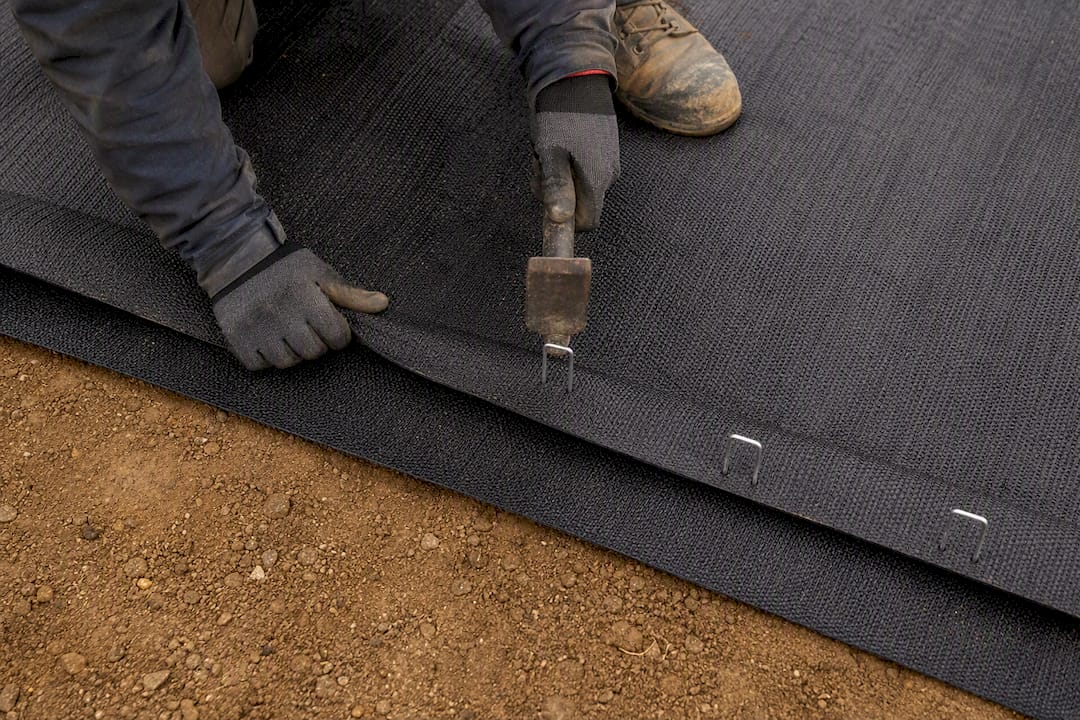
Geogrids and geotextiles work mechanically rather than chemically, which can make them a good option where chemical stabilization is less practical. A geotextile provides separation, helping keep soft subgrade from mixing with the aggregate layer, while also providing filtration by allowing water to pass while retaining soil particles. A geogrid provides reinforcement and confinement by helping limit lateral movement of aggregate and improve the performance of the aggregate section.
Geosynthetics may be preferred over chemical treatment in several situations:
-
The schedule cannot accommodate a curing period and construction needs to continue soon after installation.
-
Wet or cold weather makes chemical treatment more difficult or less practical.
-
Soil conditions vary across the site, making a single chemical treatment difficult to apply consistently.
-
Soil chemistry, organic content, or other site conditions make chemical stabilization less suitable.
Geosynthetic reinforcement can be used across a range of weak subgrade conditions. FHWA guidance identifies geosynthetics as particularly useful for soft, wet subgrades and also recognizes reinforcement applications for soils with CBR values between 3 and 8, depending on the geosynthetic type, aggregate thickness, and project design. The appropriate solution should be based on the actual subgrade strength, aggregate section, drainage conditions, and design requirements.
Design inputs that matter include geogrid aperture size relative to aggregate gradation, required aggregate thickness above the geosynthetic, soil strength, drainage conditions, and the intended function of the material. Geotextiles are commonly placed at the subgrade and aggregate interface for separation and filtration, while geogrid placement can vary depending on the reinforcement design.
Pro Tip: Follow the manufacturer’s installation requirements for overlap, anchoring, aggregate placement, and equipment traffic. Proper installation is critical to maintaining separation and reinforcement performance throughout construction.
When Is Undercut and Replace the Better Choice?
Some soils are better suited for removal and replacement than stabilization in place. Organic soils, saturated or very weak subgrades, and layers containing debris or unsuitable fill are common candidates for undercut and replacement rather than chemical or mechanical treatment. Organic matter can interfere with cement or lime stabilization, so soils with significant organic content should be evaluated carefully before chemical treatment is selected.
Undercut depth can range from a shallow soft spot to several feet where unsuitable material extends deeper, with the replacement material determined by the project specifications, soil conditions, availability, and cost. Options may include:
-
Select granular fill, material meeting project requirements for gradation, plasticity, and compaction.
-
Aggregate base course (ABC), a well-graded crushed aggregate used to provide a stable working or pavement section.
-
Recycled concrete or asphalt aggregate, where permitted by the project specifications and appropriate for the application.
Compaction requirements for replacement fill should follow the project specifications and depend on the type of material being placed. Granular fill is commonly compacted to a specified percentage of maximum dry density at an appropriate moisture content, with testing performed throughout placement rather than only at final grade. Proof-rolling, density testing, DCP testing, or other field evaluation methods may also be used depending on the project requirements.
The tradeoff with undercut and replacement often comes down to hauling, disposal, replacement material, and schedule. Removing unsuitable soil can add significant cost, but it also avoids some of the material compatibility and curing considerations associated with chemical stabilization. On sites with highly variable or unsuitable soils, removal and replacement may provide a more practical and predictable solution.
What Lab and Field Tests Confirm a Stabilization Design Works?
A successful stabilization program starts with understanding the existing soil conditions. Depending on the project, testing may include sieve analysis, Atterberg limits, plasticity index, natural moisture content, CBR, and evaluation for sulfates or organic content before a binder or reinforcement method is selected.
For chemical stabilization, the mix-design process generally includes:
-
Determine the soil’s moisture-density relationship and optimum moisture content using the applicable test method, such as AASHTO T99 or T180.
-
Evaluate trial mixtures using appropriate percentages of the selected stabilizer.
-
Cure and test specimens according to the project requirements to evaluate strength and performance.
-
Compare the results with the strength, stiffness, or other acceptance criteria established for the project.
A stabilized subgrade should meet the acceptance criteria established by the project specifications and mix design rather than being judged only by how firm it feels during construction.
Field quality control helps confirm that the constructed section matches the approved design. Depending on the project, this may include density testing, moisture testing, proof-rolling, DCP testing, verification of stabilizer application rates, or other specified quality-control procedures. MDOT’s research on subgrade stabilization emphasizes the importance of project-specific mix designs, test sections, construction procedures, and quality control and assurance.
Clear acceptance criteria also help contractors, inspectors, and owners work toward the same result. Rather than relying only on general language such as “firm and unyielding,” specifications can identify measurable strength, density, stiffness, or other performance requirements appropriate for the stabilization method.
How Do You Sequence Construction for Stabilized Subgrades?
Sequencing plays a major role in whether a stabilization method performs as designed. A typical sequence may include stripping and grading to subgrade elevation, proof-rolling or evaluating the subgrade for soft areas, completing the selected treatment, compacting to specification, and performing final testing or acceptance before the next layer is placed.
Drainage deserves attention at every stage, not just at final grade. Surface grading should help move water away from the working section, while subsurface drainage may be necessary where groundwater or persistent moisture is a concern. On soft sites, a temporary construction platform, such as an aggregate layer or geosynthetic-reinforced section, can help keep equipment moving while protecting the subgrade. Erosion control measures during construction also help protect the site and support stormwater compliance.
Chemical stabilizer handling requires proper safety measures, including dust control and appropriate PPE during spreading and mixing. Undercut material should also be handled, transported, and disposed of in accordance with project requirements and applicable regulations.
Several construction issues can affect the performance of a stabilized subgrade:
-
Incomplete mixing, which can leave areas of untreated or inconsistently treated soil.
-
Improper moisture or compaction, which can prevent the treated material from reaching the intended density and performance.
-
Insufficient curing or exposure to moisture too early, which can affect strength development in chemically stabilized soils.
Pro Tip: For chemical stabilization, a test strip can help confirm the proposed equipment, application rate, mixing, compaction, curing, and testing procedures before full production begins.
What Barnhart Excavating Has Learned Stabilizing Subgrades in the Field
Subgrade work starts with understanding what the soil and the project actually require. The right solution may involve undercut and replacement, chemical stabilization, geosynthetics, improved drainage, or a combination of methods. Soil conditions, geotechnical recommendations, project specifications, weather, and schedule all factor into how the work is approached.
The operational side matters just as much as the selected method. Coordinating testing, material deliveries, equipment, and construction sequencing helps prevent delays and keeps crews from moving ahead before the subgrade is ready. When chemical stabilization is used, mix-design requirements, test strips, compaction, and curing all need to be accounted for in the schedule.
Subgrade stabilization is ultimately about building a reliable foundation for everything that follows. Careful preparation, testing, moisture control, compaction, and coordination help reduce problems before pavement, concrete, or other site improvements are placed. Barnhart Excavating’s earthwork and grading services follow that same field-focused approach.
The Real Lesson From Subgrade Failures
Many subgrade problems can be traced back to decisions made before stabilization work begins. Selecting a treatment method without fully considering the soil conditions, CBR, plasticity index, sulfate content, drainage, and project requirements can create problems later in construction or after paving.
Chemical stabilization and geosynthetics both have a place in subgrade improvement, but neither is a universal solution. Cement and lime can provide significant benefits when matched to the right soil and properly designed, while geosynthetics can provide separation, reinforcement, filtration, or improved constructability depending on the application. The right approach depends on the actual site conditions and project requirements.
If there is one priority above the rest, it is to let testing and project requirements guide the stabilization method rather than choosing a solution based only on schedule or convenience. CBR, plasticity, soil classification, moisture conditions, and other geotechnical information help determine which approach is appropriate. Clear performance criteria and proper testing give the contractor, engineer, and owner the same target.
Get Subgrade Stabilization Done Right the First Time
Choosing the right stabilization method is only part of the process. Successful execution also depends on proper subgrade preparation, moisture control, compaction, testing, sequencing, and coordination with the project team.
Combining earthwork, undercut and replacement, grading, and pavement preparation under an experienced civil contractor can help keep those activities coordinated from the subgrade up.
A first engagement typically starts with a site visit to review the grading plan and existing site conditions, followed by coordination with the project team and geotechnical engineer as needed. From there, Barnhart Excavating can prepare a scope and estimate based on the project requirements, whether that involves undercutting, chemical stabilization, geosynthetics, grading, or related earthwork.
If your next project has challenging subgrade conditions, or you want to address potential issues before construction progresses, Barnhart Excavating can help evaluate the earthwork scope and coordinate the work around the project’s actual site and soil conditions. Plus, if you let Barnhart Excavating in during the design phase, we can help push engineers to think outside the box when it comes to soil stabilization.
Where to Find the Technical Standards
Subgrade stabilization requirements should be based on project specifications, geotechnical recommendations, and applicable technical guidance. Useful references include the Portland Cement Association’s guidance for cement-stabilized soils, MDOT’s research on subgrade stabilization, INDOT’s soil modification and stabilization procedures, and FHWA geotechnical guidance.
-
PCA guidance: cement-stabilized soil mix design, testing, and construction considerations.
-
MDOT SPR-1733: site selection, mix design, test strips, construction procedures, and quality control for subgrade stabilization.
-
INDOT soil modification and stabilization procedures: soil classification, moisture, sulfate content, organic content, strength testing, and selection of chemical treatment.
-
FHWA geotechnical guidance: subgrade improvement, chemical stabilization, geosynthetics, drainage, compaction, and pavement foundation considerations.
Sources
-
Guide to Cement-Stabilized Subgrade Soils — Portland Cement Association
-
Establish Policies and Procedures for Use of Subgrade Stabilization in Michigan — MDOT SPR-1733
-
Design Procedures for Soil Modification or Stabilization — INDOT
-
Geotechnical Engineering Circular No. 5: Evaluation of Soil and Rock Properties — FHWA
-
Optimizing Pavements: Geosynthetics vs. Chemical Stabilization for Subgrade Improvement — ASCE
FAQ
What Are the Three Main Methods of Soil Stabilization?
The three primary approaches are chemical stabilization using materials such as cement or lime, mechanical reinforcement with geosynthetics such as geotextiles or geogrids, and undercut and replacement with suitable fill. Some projects use a combination of methods depending on soil conditions and design requirements.
How Do You Stabilize a Dirt Road?
Dirt road stabilization depends on the existing soil, drainage, traffic, and intended use. Common approaches include improving drainage, adding and compacting aggregate, using geotextiles or geogrids for separation and reinforcement, or chemically treating suitable soils when supported by testing and project requirements.
What Are Some Examples of Ground Stabilization Measures?
Common examples include cement-treated subgrade, lime-treated soil, geotextile separation, geogrid-reinforced aggregate sections, improved drainage, and undercut and replacement with suitable fill.
How Many Types of Subgrade Stabilization Are There?
Subgrade stabilization is generally grouped into three broad categories: chemical treatment, mechanical reinforcement, and removal and replacement. Many projects combine multiple methods based on soil conditions, drainage, loading, and project requirements.
Can Barnhart Excavating Handle Subgrade Repair on an Existing Site?
Yes. Barnhart Excavating provides earthwork services for existing and new construction sites, including undercutting, grading, subgrade preparation, and coordination of stabilization work based on project specifications and site conditions.Recommended